


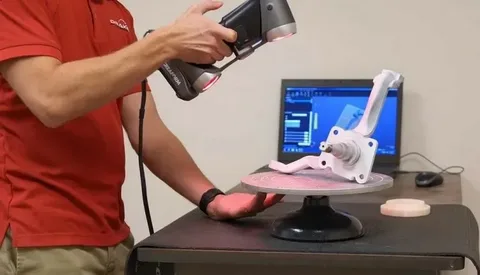
In today’s rapidly advancing technological landscape, 3d scanning has emerged as a powerful tool for capturing real-world objects and environments in digital form. Whether you’re in product design, healthcare, engineering, or gaming, understanding how 3D scanning works can give you a competitive edge. This beginner’s guide will introduce you to the basics of 3D scanning technology, its uses, and how it is revolutionizing industries.
What is 3D Scanning?
3D scanning refers to the process of capturing the shape, size, and appearance of a physical object or environment and converting it into a digital model. The scanned data can then be used in various applications, such as computer-aided design (CAD), virtual simulations, and even 3D printing.
The core technology behind 3D scanning involves the use of lasers, cameras, or other sensors to measure the surface geometry of an object. These measurements are collected and processed into a 3D model that is highly accurate and detailed. The precision of this data is what makes 3D scanning such a valuable tool across multiple industries.
Key Types of 3D Scanners
There are several types of 3D scanning technologies, each with its advantages and applications. Let’s take a look at the most common ones:
1. Laser Scanners
Laser scanners use laser beams to measure the distance between the scanner and the object’s surface. These measurements are then used to generate highly accurate 3D models. Laser scanning is commonly used in engineering, architecture, and even for archaeological preservation due to its precision.
2. Structured Light Scanners
Structured light scanners project a pattern of light onto an object and analyze how the pattern deforms on the object’s surface. This method allows for quick, accurate scanning, and is frequently used in product design and inspection.
3. Contact Scanners
Contact scanners work by physically touching the object’s surface with a probe to measure the geometry. These scanners offer great precision and are often used in industrial applications where the highest level of detail is required.
4. Photogrammetry
Photogrammetry uses multiple photographs taken from various angles to reconstruct a 3D model of the object. While it’s less precise than laser scanning, photogrammetry is a cost-effective option for creating 3D models of larger objects or environments.
Unlocking Precision: How 3D Scanning Revolutionizes Industries
The accuracy and speed of 3D scanning technology have made it a game-changer in many fields. Let’s explore how different industries are leveraging 3D scanning to unlock precision and enhance efficiency.
1. Manufacturing and Product Design
In manufacturing, 3D scanning is used to create digital models of existing parts and prototypes. These models can then be optimized for production or tested in virtual environments. By unlocking precision, designers can quickly identify flaws and make improvements before physical prototypes are created, saving both time and resources.
2. Healthcare and Prosthetics
In the medical field, 3D scanning is used for creating personalized prosthetics and implants. The precision offered by 3D scanning allows for custom-fit solutions that improve the comfort and functionality of medical devices. Additionally, 3D scans of patients’ bodies can help doctors plan surgeries with greater accuracy.
3. Archaeology and Preservation
Archaeologists use 3D scanning to digitally preserve artifacts and historical sites. The precision offered by these technologies allows for detailed documentation, even of fragile objects that may deteriorate over time. 3D scanning enables researchers to study and share these artifacts without the risk of physical damage.
4. Virtual Reality and Gaming
3D scanning is increasingly used in the creation of virtual environments for gaming and simulations. By scanning real-world objects or locations, developers can create highly realistic 3D models that are then used in virtual worlds. This has enhanced the immersive experience of modern gaming, offering a level of realism that was previously unimaginable.
The Future of 3D Scanning Technology
As 3D scanning technology continues to evolve, we can expect further advancements in precision, speed, and accessibility. The integration of artificial intelligence (AI) and machine learning with 3D scanning is opening new doors for automation, making it easier to scan large objects or environments with even greater accuracy. Additionally, improvements in scanning hardware and software are making these tools more affordable and available to a broader range of industries and individuals.
Conclusion: Unlocking Precision for the Future
In conclusion, 3D scanning technology is a powerful tool that unlocks precision in a variety of industries, from manufacturing and healthcare to archaeology and gaming. Whether you’re a professional looking to optimize workflows or a hobbyist interested in creating digital models, understanding the basics of 3D scanning can open new opportunities for creativity, innovation, and efficiency. As technology continues to advance, the potential applications of 3D scanning are limitless, making it an essential tool for the future.
