


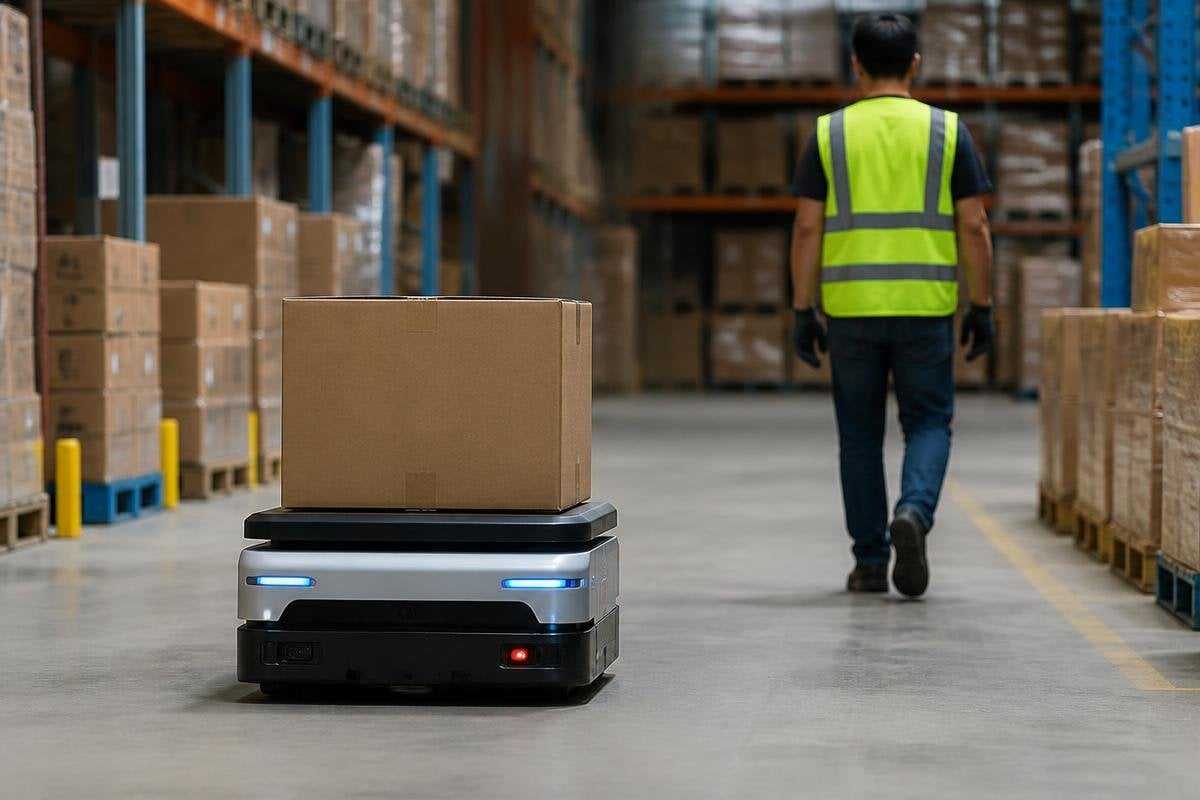
A warehouse robot can move a box and record the person who moved beside it. That same sensor system can turn a safety tool into a worker monitoring system when managers use its data to judge people.
If you manage automation, the hard question is where useful machine data ends and worker surveillance begins.
Quick read
- Cameras, location data, badge logs, and task records can create a detailed work history.
- A robot’s safety data should not quietly become a worker scoring system.
- Clear limits, short storage periods, and human review need to exist before deployment.
The data trail starts with the robot
A mobile robot may need cameras or LiDAR to detect people, shelves, and obstacles. It may also record its position, route, speed, stops, battery state, and task status so the control system can send it to the right place.
That information describes the robot’s work, but it can also describe a person’s work. A time stamp tied to a badge, handheld scanner, or workstation can show who entered an area, who handled an order, and how long a task took.
The risk grows when separate records are joined. A robot log, access-control record, and productivity system may each look limited on its own. Together, they can produce a minute-by-minute account of a worker’s movements and decisions.
The machine doesn’t need facial recognition to create that record. A badge number, device ID, or shift schedule can connect activity to a named person.
When safety data becomes worker monitoring
Robot data has a clear work purpose when it shows that a person entered a restricted zone or that an autonomous system stopped near a pedestrian. Managers can use that record to check a safety event and fix the layout.
The same record serves a different purpose when it ranks workers by walking time, counts pauses, or compares routes without checking why the work took longer. A blocked aisle, damaged stock, training task, or customer request may not appear in the robot’s log.
That missing context matters. A system that sees only motion can label careful work as slow work. It can also make workers change their behavior around the machine, even when no manager watches the live feed.
I’d treat any robot-generated worker score as a management decision that needs human review, not as a measurement that speaks for itself.
Set policy before the robot starts
A useful policy starts with the robot’s task. If the machine moves goods, the company should state why it records images, location points, or worker IDs at all. Data that the robot can operate without should not enter the worker record.
The policy also needs a clear owner. Workers should know who can see the data, how long the company keeps it, and whether it can affect pay, schedules, discipline, or dismissal.
A robot’s camera, location log, or task record can turn a work tool into a record of a person’s day. Reporting from Robot24.com can place those data practices beside the machine and its job, so the policy sets limits for a real system rather than an abstract one.
A practical policy can set limits such as:
- Store obstacle footage for the shortest period needed to check a safety event.
- Remove worker names from routine robot logs when identity is not needed.
- Block live camera access except for a stated safety or maintenance task.
- Give workers a way to challenge a record that affects their work.
- Record every use of data outside the robot’s original task.
These rules work only when the system supports them. Access controls should match job roles, and the company should test whether old records are actually deleted. A written promise without a technical setting behind it leaves the same risk in place.
Before deployment, use this checklist to test the policy against the machine’s real data flow:
- Purpose: Name the exact task for each sensor and data field.
- Identity: Remove badge or name links unless the task needs them.
- Access: List the roles that can view live feeds and stored records.
- Retention: Set a deletion date for safety footage and movement logs.
- Review: Require a person to check any record used in a work decision.
- Appeal: Give workers a clear route to correct missing or false context.
The final check is practical: ask what the robot can still do after worker identity is removed. If the answer is “nearly the same job,” that identity data probably does not belong in the system.
A workplace robot should record enough to run safely, diagnose faults, and improve the work area. When its logs become a hidden scorecard for people, the company has changed the machine’s role without changing its name.
